The 5 Best Tire Repair Kits You Should Carry
The best tire repair kits to carry in your car in 2026, including plug kits, off-road repair kits, compact Dynaplug tools, budget kits, and sealant-plus-compressor emergency options.
Quick Summary
What to know first
The best tire repair kit for most drivers is the Rhino USA 86-Piece Tire Repair Kit because it gives you real plug-repair hardware, enough consumables for repeat use, and broad vehicle compatibility without becoming an expensive off-road-only tool.
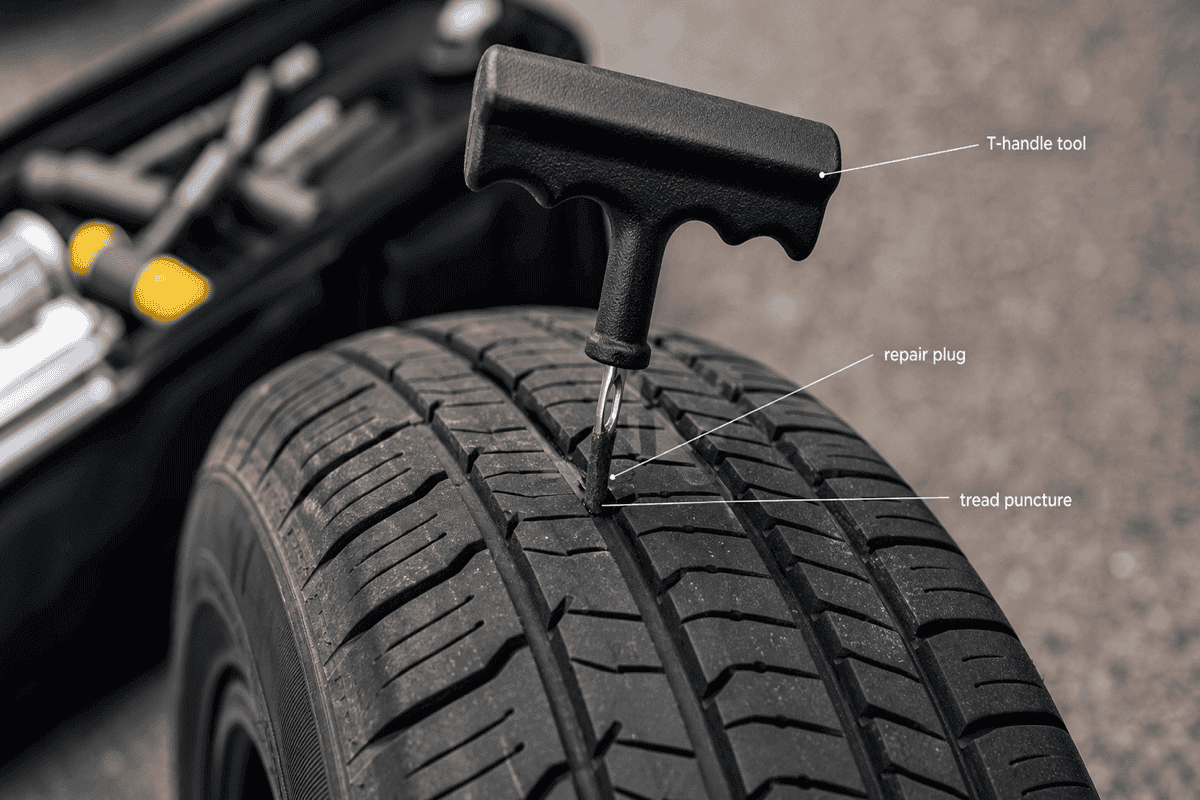
A flat tire never happens at a convenient time. It happens on the way to work, at night, in a supermarket parking lot, or halfway through a road trip when the closest tire shop is not exactly around the corner.
Safety warning: A tire repair kit does not replace tire judgment. Plug kits are only for small punctures in the main tread area of a tubeless tire. They do not make sidewall damage, shoulder damage, blowouts, exposed cords, bead leaks, or a tire that has been driven flat structurally safe. If the tire looks distorted, smells burnt, loses pressure again, or the damage is outside the repairable tread zone, use a spare tire or get professional inspection.
That is why this guide separates true plug kits from sealant-based emergency kits. If you want the most control, buy a proper plug kit and pair it with a portable inflator. If you want the easiest panic-button solution, a sealant-and-compressor kit is less elegant but more approachable.
Quick Picks
Best Overall - Rhino USA 86-Piece Tire Repair Kit
The best default kit for most drivers because it includes strong tools, plenty of plugs, and broad vehicle compatibility.
Best for Off-Road & Overlanding - ARB Speedy Seal Series II
The rugged pick for 4x4 owners, trail drivers, and people who may need more than a basic roadside plug kit.
Fastest Compact Repair - Dynaplug Pro Xtreme
The premium compact tool for drivers who want fast puncture repair with less reaming and less roadside drama.
Best Budget Option - Slime Deluxe Tire Plug Kit
The affordable kit that covers the basics without pretending to be professional recovery gear.
Easiest Emergency Backup - Slime Smart Repair Kit
The simplest option if you want sealant and air in one package instead of learning a traditional plug repair.
Can This Tire Be Repaired?
Before choosing a kit, make the safety call first. A plug kit is for small punctures in the main tread area of a tubeless tire. It is not for sidewall cuts, shoulder damage, bead leaks, blowouts, or tires that were driven flat long enough to overheat the carcass.
Plug kits are for the center tread only. If the puncture sits near the shoulder or sidewall, treat the tire as unsafe and get professional inspection.
How To Choose Fast
- Want one kit for most normal cars -> Rhino USA 86-Piece Tire Repair Kit
- Drive off-road or far from help -> ARB Speedy Seal Series II
- Ride motorcycles or want the fastest compact tool -> Dynaplug Pro Xtreme
- Want the cheapest useful plug kit -> Slime Deluxe Tire Plug Kit
- Want the easiest temporary emergency solution -> Slime Smart Repair Kit
Who It’s For / Not For
Who it’s for:
- Drivers who want a realistic backup plan for a nail or screw in the tire tread.
- Road-trip drivers building a proper emergency kit around tire repair, inflation, lighting, and jump starting.
- Truck, SUV, trailer, ATV, and motorcycle owners who do not want to wait helplessly for roadside assistance.
- People who understand that a puncture repair is a controlled emergency fix, not permission to ignore tire safety.
Not ideal for:
- Sidewall punctures, shoulder damage, torn rubber, bubbles, or tires that have been driven fully flat.
- Drivers who do not also carry a way to reinflate the tire after repair.
- Anyone expecting a five-minute plug job to replace professional tire inspection after a serious puncture.
Safety Reality Check
Only repair punctures in the main tread area. If the hole is in the sidewall or near the shoulder of the tire, do not plug it. If the tire has been run flat, looks distorted, smells burnt, has exposed cords, or loses pressure again after repair, treat the tire as unsafe and get professional help.
For the best roadside setup, carry three things together: a plug kit, a portable inflator, and a pressure gauge. The plug stops the leak. The inflator restores pressure. The gauge tells you whether the repair is holding.
How Tire Plug Kits Actually Work
A traditional plug kit works by forcing a sticky repair string into the puncture channel. The reamer cleans and slightly sizes the hole, the insertion tool folds the plug into the tread, and the plug material compresses against the rubber as air pressure tries to escape.
That is why tool strength matters. The job can require real leverage, especially on truck tires or stiff tread blocks. It is also why a plug is not the whole repair system. You still need to remove the object, check the puncture location, reinflate the tire, verify pressure, and inspect again after a short drive.
Sealant kits work differently. They push liquid sealant into the tire and use rotation plus air pressure to spread the material around the inside of the casing. That is easier on the roadside, but it is usually more temporary and can make later tire service messier.
Rhino USA 86-Piece Tire Repair Kit - Best Overall
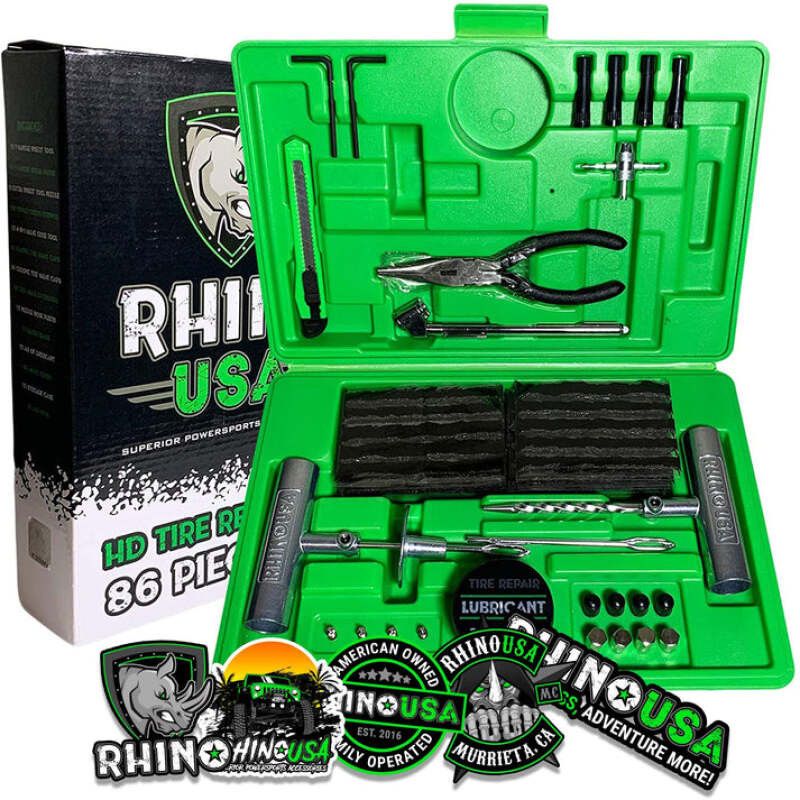
Rhino USA 86-Piece Tire Repair Kit
This is the kit I would put in most normal cars, SUVs, trucks, and family road-trip setups.
The Rhino USA 86-Piece kit works because it is complete without becoming specialist equipment. You get the basic tire-plug workflow: find the puncture, remove the object, clean and size the hole, load a repair plug, insert it, trim the excess, and reinflate the tire. That sounds simple, but the difference between a good kit and a bad kit is tool stiffness. Cheap handles and soft metal probes can bend right when you need force and control.
Rhino’s value is that it gives most drivers enough hardware and enough repair plugs to practice once and still have plenty left for real roadside use. That matters. The first time you learn how a plug tool feels should not be at night with a leaking tire.

Pros
- Complete enough for real ownershipThe plug count and tool set make it more useful than tiny emergency-only kits.
- Better tool leverageStrong handles and metal tools matter when the puncture channel is tight.
- Broad vehicle fitIt makes sense for cars, SUVs, light trucks, trailers, ATVs, and general roadside kits.

Cons
 Not the smallest kitIt takes more storage space than minimalist motorcycle-style repair tools.
- Still requires techniqueYou need to learn the plug process before an emergency for best results.
- No inflation by itselfPair it with a portable tire inflator or compressor.
Best For:
Drivers who want one practical tire plug kit to keep in the trunk.
Why We Picked It:
It has the best balance of tool strength, consumables, compatibility, and value for normal drivers.
Compliance & Safety Check (Expand to View)
- Mechanical & safety profile: Heavy-duty manual plug kit using high-tensile steel tools for tubeless tread puncture repair.
- Risk warnings: Retail safety notices list chemical exposure warnings, including Di(2-ethylhexyl) phthalate (DEHP) under California Proposition 65. Manual reaming also creates mechanical injury risk if the tool slips.
- First aid / handling: Wear gloves and eye protection when reaming the puncture channel. Keep hands clear of the insertion path and stop if the tool binds or the tire carcass looks damaged.
- Manufacturer / registry: Rhino USA, Temecula, California, USA.
- Traceability profile: Strong consumer-retail traceability, with published product listings and kit-level component documentation.
ARB Speedy Seal Series II - Best for Off-Road & Overlanding
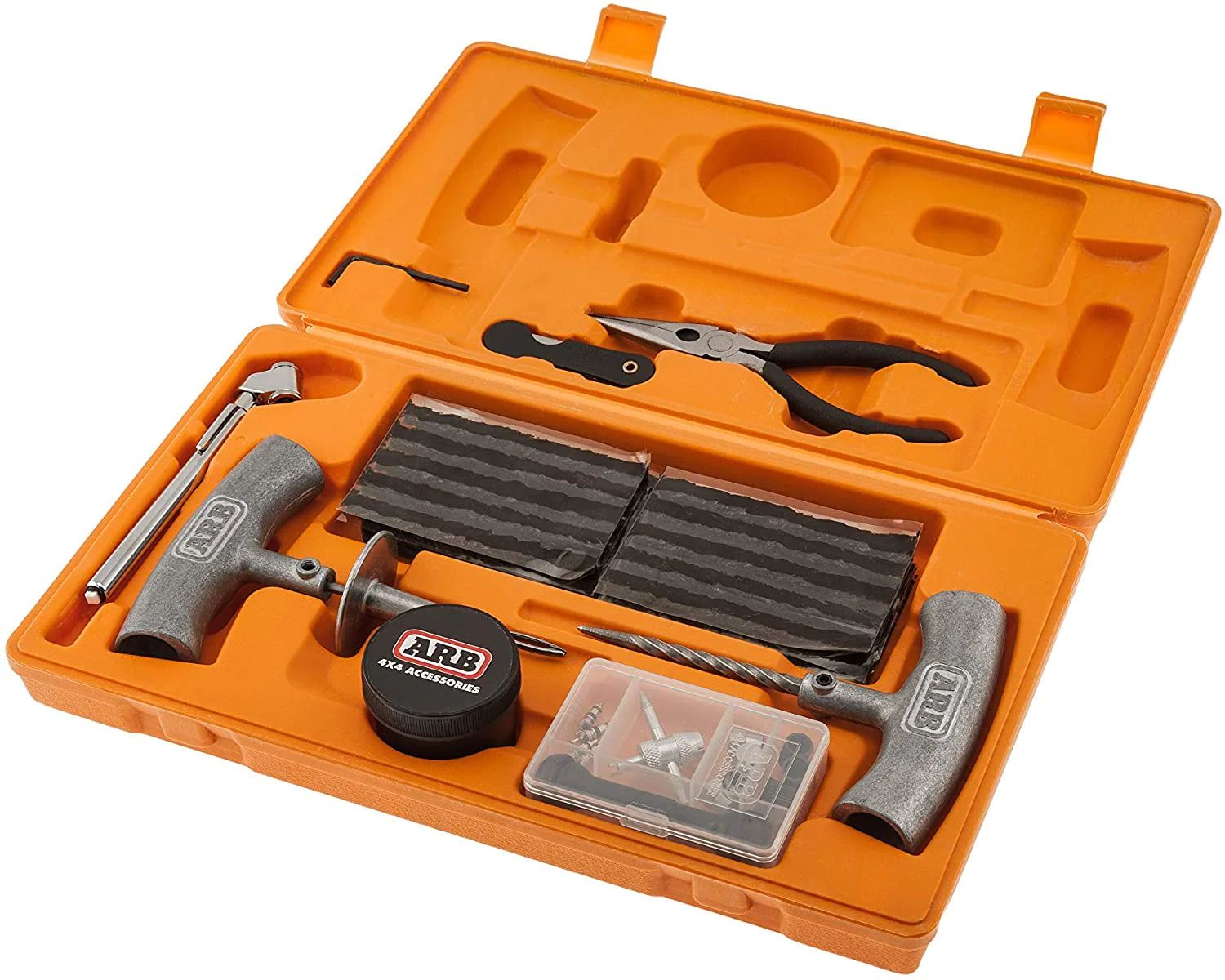
ARB Speedy Seal Series II
ARB is the serious off-road pick here. This is the kit that makes sense when the consequence of a flat tire is not just inconvenience, but being far from easy recovery.
The Speedy Seal Series II is built around a more complete trail-repair mindset. Alongside the plug tools and repair cords, it includes valve-related accessories and a rugged case, which matters more than it sounds. In off-road use, punctures are not always clean little nails. You may deal with sharp rocks, trail debris, valve issues, dust, and awkward repair positions.
For normal commuting, ARB is more than most people need. For overlanding, remote gravel travel, trailers, or 4x4 owners who already carry a compressor, it feels like the right level of kit.
Pros
- Built for remote drivingThe kit logic fits trail use, 4x4 travel, and off-road self-recovery.
- More complete repair supportValve accessories give it more range than a bare plug-only kit.
- Trusted off-road brandARB has strong credibility with overlanders and serious 4x4 owners.
Cons
- Premium priceIt costs more than most basic plug kits.
- Overkill for some driversIf you only commute locally, Rhino or Slime may be enough.
- Compressor still requiredTrail drivers should pair it with a real portable air compressor.
Best For:
4x4 owners, overlanders, off-road drivers, and remote-road travelers.
Why We Picked It:
It is the most convincing choice for people who treat tire repair as part of a larger recovery system.
Compliance & Safety Check (Expand to View)
- Mechanical & safety profile: Trail-focused tubeless repair kit designed around off-road accessory standards, with a rugged case, plug tools, repair cords, and valve-service parts.
- Risk warnings: High-leverage tools can pinch or injure hands if used carelessly. Do not use on structural sidewall damage, exposed cords, bead damage, or tires driven flat.
- First aid / handling: Keep tools clean so plugs can bond correctly. Store sharp components in the supplied case and use gloves when working around damaged tread.
- Manufacturer / registry: ARB Corporation Ltd, 42-44 Garden St, Kilsyth, VIC, Australia.
- Traceability profile: Strong off-road documentation profile, with published kit specifications and established global accessory distribution.
Dynaplug Pro Xtreme - Fastest Compact Repair
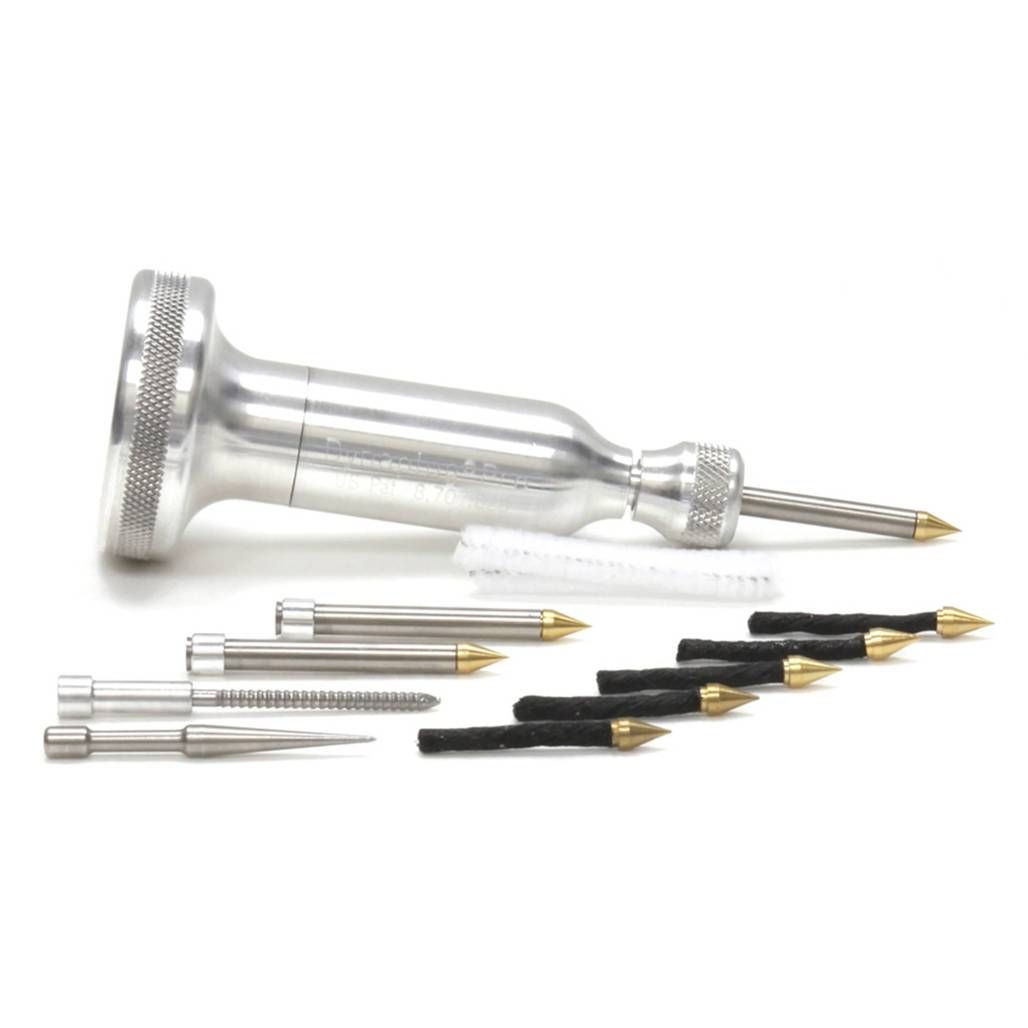
Dynaplug Pro Xtreme
Dynaplug is the elegant option. Instead of the traditional ream-and-plug routine, Dynaplug uses a compact insertion tool with preloaded plug tips. That makes it especially attractive for motorcycles, performance cars, and drivers who want a repair tool that is fast and easy to store.
The advantage is speed and reduced drama. Traditional plug kits work well, but they can feel crude: ream the hole, fight the rubber, push the plug, pull back, trim. Dynaplug feels more precise. For small punctures in the tread area, the process can be much quicker and cleaner.
The tradeoff is price. You are paying for compact design and convenience, not for the cheapest possible puncture repair.
Pros
- Very fast repair rhythmThe tool is designed for quick insertion with less setup.
- Compact storageIt is easier to keep in a motorcycle bag, glovebox, or small emergency pouch.
- Less aggressive processFor suitable punctures, it avoids the heavy reaming feel of traditional kits.
Cons
- Expensive for what it carriesTraditional kits include more consumables for less money.
- Consumables are more specificYou need the right Dynaplug refills rather than generic repair strings.
- Not the heavy-duty trail pickARB is the better system for remote 4x4 travel.
Best For:
Motorcycle riders, performance-car owners, and drivers who want the fastest compact puncture tool.
Why We Picked It:
It is the most refined repair method here for small tread punctures when speed and compact storage matter.
Compliance & Safety Check (Expand to View)
- Mechanical & safety profile: Precision compact tool built around billet aluminum or stainless-steel bodies with hardened stainless insertion tubes.
- Risk warnings: Contains sharp insertion tips. Keep away from children and store securely to prevent puncture wounds or impact injuries.
- First aid / handling: No glue or solvent handling is required. Treat the insertion tube like a sharp workshop tool and avoid pressing it toward your hand or body.
- Manufacturer / registry: Dynaplug, 13267 Contractors Drive, Chico, California, USA.
- Traceability profile: High. Dynaplug publishes specific refill compatibility and technical specifications for its repair plugs and insertion tools.
Slime Deluxe Tire Plug Kit - Best Budget Option
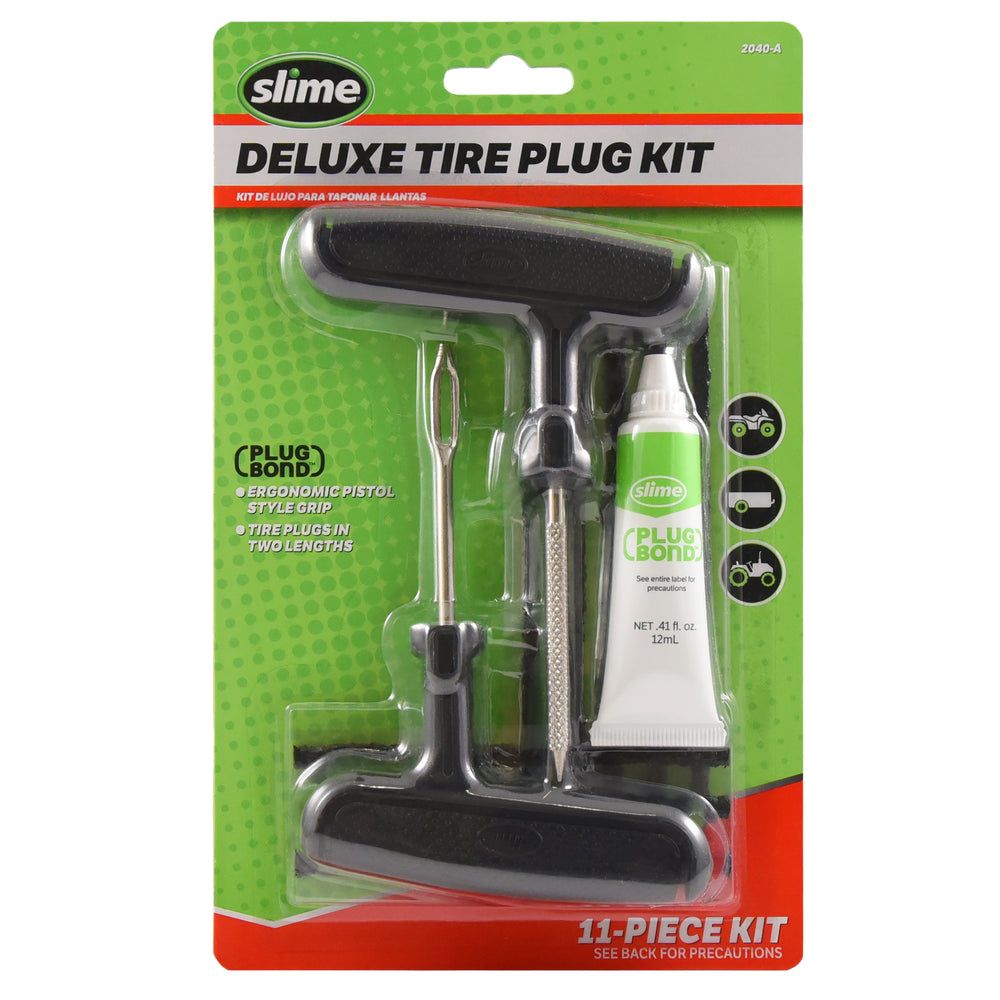
Slime Deluxe Tire Plug Kit
This is the kit for people who want the basics and do not want to overthink it.
The Slime Deluxe Tire Plug Kit covers the core traditional repair process: clean the puncture, insert a plug, trim it, and reinflate. It is not as complete as Rhino and it does not have the premium off-road feel of ARB, but the basic logic is sound. For a commuter car or a backup kit in a second vehicle, that can be enough.
The main limitation is durability and comfort. Budget plug tools can require more patience, especially in thicker tires. If you expect regular use, step up. If you want a low-cost emergency option, this is still far better than carrying nothing.
Pros
- Low costIt gives budget buyers the basic puncture repair workflow.
- Easy to storeThe compact case fits into a normal roadside kit without much space penalty.
- Good starter kitIt is useful for learning the basic plug method before buying a more serious kit.
Cons
- Less tool confidenceIt does not feel as sturdy as Rhino or ARB under heavy pressure.
- Not ideal for frequent repairsDrivers with trucks, trailers, or trail use should step up.
- No inflation includedYou still need a compressor or inflator in the car.
Best For:
Budget-conscious drivers who want a basic plug kit for occasional emergencies.
Why We Picked It:
It is not fancy, but it covers the essential job at a low price.
Compliance & Safety Check (Expand to View)
- Mechanical & safety profile: Consumer-grade steel plug tools paired with rubber-cement-assisted rope-plug repair for tubeless tread punctures.
- Risk warnings: Rubber cement may contain flammable petroleum distillates such as heptane. SDS warnings include H225: Highly flammable liquid and vapor, H304: May be fatal if swallowed and enters airways, and H350: May cause cancer.
- First aid / handling: Wear nitrile or neoprene gloves. Keep away from ignition sources. If swallowed, do not induce vomiting; seek medical advice immediately.
- Manufacturer / registry: Accessories Marketing, Inc. / ITW Global Brands, 125 Venture Drive, San Luis Obispo, California, USA.
- Traceability profile: Strong for adhesive components because Safety Data Sheets are published for the rubber cement and related chemicals.
Slime Smart Repair Kit - Easiest Emergency Backup
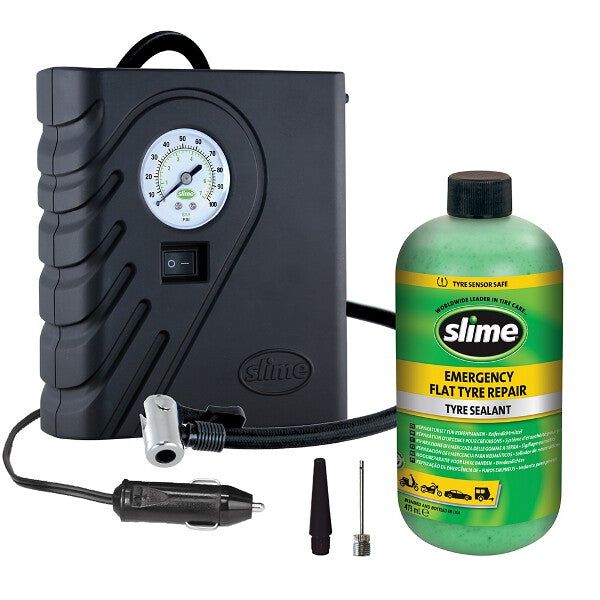
Slime Smart Repair Kit
This is the easiest option for people who do not want to manually plug a tire on the roadside.
The Slime Smart Repair Kit combines sealant and inflation, which changes the job completely. Instead of finding the puncture, pulling the object, and forcing in a plug, the kit is designed as a temporary emergency system: inject sealant, inflate the tire, and drive carefully to get the tire inspected or replaced.
That convenience is the whole point, but it is also the limitation. Sealant can be messy, temporary, and less satisfying than a proper plug. It may also complicate later tire service. Still, for nervous drivers, new drivers, or anyone who just wants the lowest-effort backup plan, it is a real option.
Pros
- Simplest roadside processIt avoids the manual plug workflow that many drivers find intimidating.
- Inflation includedUnlike a plug-only kit, it can help restore pressure in the same package.
- Good emergency fallbackIt is useful when the priority is getting safely off the roadside.
Cons
- Usually temporaryPlan on professional inspection after using sealant.
- Sealant can be messyIt may make later tire work more annoying.
- Not for major damageIt cannot fix sidewall tears, blowouts, or structural tire failure.
Best For:
Drivers who want the easiest emergency backup and are comfortable treating it as temporary.
Why We Picked It:
It is the lowest-effort solution here because it combines sealing and inflation in one emergency package.
Compliance & Safety Check (Expand to View)
- Chemical profile & safety: Emergency sealant system using Fibro-Seal particles. Published SDS data does not classify the sealant as hazardous under OSHA GHS / CLP-style handling categories.
- Risk warnings: Do not exceed the tire’s maximum inflation pressure. Keep the inflator and electrical connection away from ignition sources during roadside use.
- First aid / handling: If sealant contacts the eyes, remove contact lenses and rinse thoroughly with water. If ingested, seek medical advice.
- Manufacturer / registry: ITW Global Brands, Dallas, Texas, USA.
- Traceability profile: Strong. Fibro-Seal sealant has published SDS documentation and established retail batch tracking through Slime / ITW distribution.
What We Skipped
We skipped ultra-cheap no-name kits with weak handles, vague plug counts, or no clear replacement-plug path. A kit that bends during the first repair is worse than useless because it burns time while the tire is still losing air.
We also skipped sidewall repair claims. No consumer plug kit should be treated as a safe fix for sidewall damage, bead damage, blowouts, or a tire that was driven flat. That is not being cautious for the sake of it; that is the difference between a controlled emergency repair and trusting a structurally compromised tire.
Finally, we did not rank aerosol-only emergency cans as main picks. They can help in narrow cases, but they do not give the same control as a plug kit or a sealant-plus-compressor system.
Comparison Table
| Product | Repair Type | Best For | Main Advantage |
|---|---|---|---|
| Rhino USA 86-Piece Tire Repair KitBest overall | Traditional plug kit | Cars, SUVs, trucks, trailers, ATVs | Best balance of tool strength, plug count, and value |
| ARB Speedy Seal Series IIOff-road pick | Professional plug kit | 4x4 owners, overlanders, remote travel | Rugged case, valve tools, and trail-ready repair hardware |
| Dynaplug Pro XtremeFastest repair | Compact insertion tool | Motorcycles, performance cars, fast roadside work | Minimal prep and very quick puncture plugging |
| Slime Deluxe Tire Plug KitBudget pick | Basic plug kit | Budget buyers and occasional emergencies | Low-cost essentials for common tubeless tread punctures |
| Slime Smart Repair KitEasiest emergency | Sealant plus compressor | Drivers who want the least hands-on roadside process | Combines temporary sealing and inflation in one emergency package |
- Repair Type
- Traditional plug kit
- Best For
- Cars, SUVs, trucks, trailers, ATVs
- Main Advantage
- Best balance of tool strength, plug count, and value
- Repair Type
- Professional plug kit
- Best For
- 4x4 owners, overlanders, remote travel
- Main Advantage
- Rugged case, valve tools, and trail-ready repair hardware
- Repair Type
- Compact insertion tool
- Best For
- Motorcycles, performance cars, fast roadside work
- Main Advantage
- Minimal prep and very quick puncture plugging
- Repair Type
- Basic plug kit
- Best For
- Budget buyers and occasional emergencies
- Main Advantage
- Low-cost essentials for common tubeless tread punctures
- Repair Type
- Sealant plus compressor
- Best For
- Drivers who want the least hands-on roadside process
- Main Advantage
- Combines temporary sealing and inflation in one emergency package
Buyer’s Guide: What Makes a Good Tire Repair Kit?
Tool Strength
The insertion tool and reamer matter more than the number of small accessories in the case. A plug repair requires force. If the handles flex or the probe feels soft, the repair becomes harder and less controlled.
Enough Repair Plugs
A good kit should include enough plugs for practice and repeat use. Do not treat your first real puncture as your first lesson. Practice on an old tire if you can.
Storage Case
Loose repair tools disappear in trunks. A case keeps plugs clean, keeps tools together, and makes it easier to find everything when pressure is dropping.
Inflation Plan
Plug-only kits do not refill the tire. Pair the kit with a portable inflator, 12V compressor, or compact motorcycle inflation system.
Vehicle Fit
Passenger cars, SUVs, trucks, trailers, motorcycles, and ATVs all have different storage needs and tire sizes. A compact Dynaplug may be perfect for a motorcycle; an ARB kit makes more sense in a 4x4 recovery bag.
Common Mistakes
- Trying to plug sidewall damage.
- Forgetting that a plug kit does not inflate the tire.
- Buying a cheap kit with weak handles.
- Never practicing the plug process before an emergency.
- Driving normally after a repair without checking pressure again.
- Ignoring a tire that keeps losing air after the plug.
Bottom Line
If you want one tire repair kit for most vehicles, buy the Rhino USA 86-Piece Tire Repair Kit. It is complete, practical, and strong enough for normal roadside use.
If you drive off-road or tow regularly, step up to ARB Speedy Seal Series II.
If you want the fastest compact option, Dynaplug Pro Xtreme is the premium pick.
And if you want the easiest emergency backup with inflation included, Slime Smart Repair Kit is the least intimidating option.
Editorial Compliance References
These are the primary manufacturer and safety references used to cross-check product identity, kit contents, and chemical handling notes:
- Rhino USA 86-Piece Tire Repair Kit
- ARB tire accessories / Speedy Seal range
- Dynaplug Pro Xtreme
- Slime Deluxe Tire Plug Kit
- Slime Safety Data Sheets registry
Related Guides
Related Topics & Tags
This guide connects to these practical roadside topics: tire repair kits, flat tire, roadside kit, puncture repair, emergency gear, and tubeless tire repair.
FAQ
Common questions
Can a tire repair kit permanently fix a flat tire?
A roadside plug kit seals many tubeless tread punctures well enough to get you home or to a shop, but the tire industry generally considers a basic exterior plug a temporary fix. For a truly permanent and safe repair, the tire must be dismounted from the wheel and fixed from the inside using a combination patch-plug, often called a mushroom plug. Sidewall damage, shoulder damage, large cuts over 1/4 inch, and tires that were driven flat are never safe candidates for a plug-kit job.
Do I still need a portable tire inflator?
Yes. A plug kit only seals the puncture; it does not replace the lost air. The most effective real-world roadside setup is a tire plug kit, a 12V portable inflator or compressor, and a reliable pressure gauge.
Are sealant kits better than plug kits?
It depends on your comfort level, but generally, no. Sealant kits are easier and less intimidating for quick roadside use. However, they are strictly temporary and leave a sticky residue inside the tire. Many tire technicians charge extra labor to clean out sealant before they can properly patch the tire later. Plug kits require more physical effort, but they provide a cleaner, more controlled, and more reliable fix for simple tread punctures.
Can I use these kits on run-flat tires?
Proceed with extreme caution. Run-flat tires are designed with reinforced sidewalls to support the car's weight even with zero air pressure. However, driving on them while flat creates immense internal heat that destroys the tire's structure from the inside out, and that damage is not always visible from the outside. If the tire has been driven on with zero pressure, skip the plug kit entirely. The tire must be professionally inspected and is usually structurally compromised.
How long do tire repair plugs last in storage?
The self-vulcanizing rubber strings, usually the brown or black sticky plugs, do not last forever. When stored in a car trunk that sees extreme summer heat and winter cold, they can dry out and lose their stickiness within 1 to 3 years. Check your kit annually and buy replacement strings if they feel stiff, dry, or no longer tacky.
What if the puncture hole is too big for a single plug?
If you ream the hole and the repair string slides in and out with almost no resistance, the puncture is too large, typically anything larger than 1/4 inch in diameter. Do not attempt to stuff two or three plugs into the same hole. This is unsafe and may fail at highway speeds. At that point, use your spare tire or call for a tow.