Find the Cause Before Buying Parts
A practical rough idle and misfire diagnostic guide for petrol and diesel cars: scan codes first, separate ignition, airflow, fuel, and mechanical causes, and stop guessing before replacing parts.
Quick Summary
What to know first
A rough idle is a symptom, not a diagnosis. Start with urgency: a flashing check-engine light needs prompt attention. Then save the trouble codes before clearing anything, describe when the symptom appears, and follow the correct petrol or diesel branch before buying parts or pouring in another bottle.
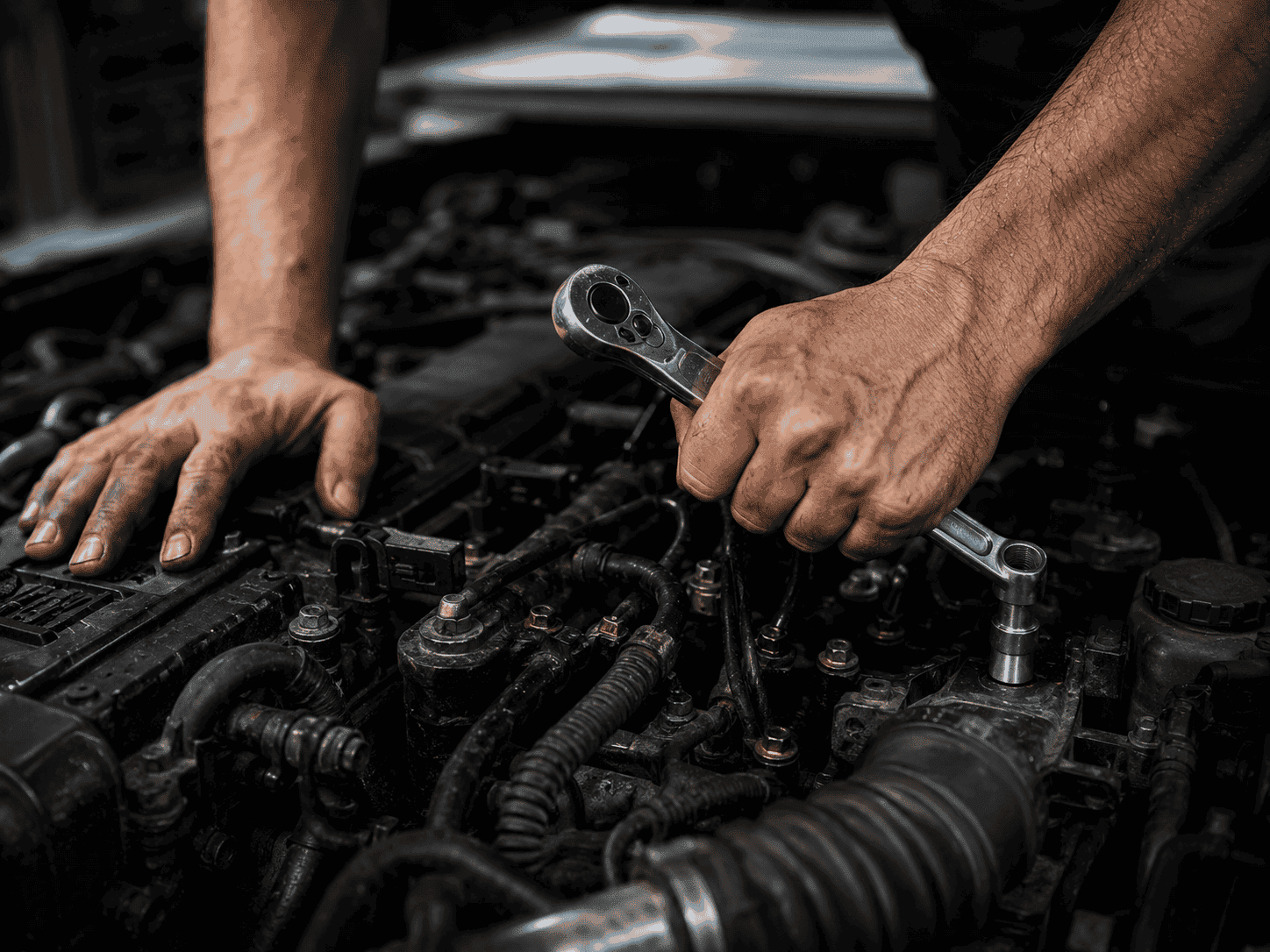
A rough idle feels simple from the driver’s seat: the steering wheel vibrates at a traffic light, the rev counter wanders, or the engine hesitates when you ask for power. Under the bonnet, however, the cause can sit in ignition, measured airflow, fuel delivery, injector condition, wiring, sensors, or mechanical compression.
That is why the first rule is simple: do not diagnose a symptom by buying the first part that sounds plausible.
This guide gives normal car owners a sensible order of operations. It is designed to help you collect useful evidence, make safer decisions, and understand when an OBD2 scanner, a targeted fuel treatment, or a workshop test is the right next move.
Safety warning: A flashing check-engine light is not a “wait and see” signal. EPA guidance explains that a flashing malfunction indicator light can indicate severe engine misfire with a risk of catalytic-converter damage. Reduce speed, avoid heavy load, consult the vehicle manual, and seek service promptly. Stop driving immediately if the car also shows an oil-pressure warning, overheating warning, severe knocking, or an unsafe loss of power.
Start Here: Is It Safe to Keep Driving?
Before you reach for a scanner or a bottle, look at the warning pattern.
- Flashing check-engine light: Reduce speed and engine load. Treat this as urgent.
- Steady check-engine light with mild rough running: Scan the car soon and avoid ignoring the symptom for weeks.
- Heavy shaking, strong fuel smell, smoke, overheating, oil-pressure warning, or severe power loss: Stop treating the problem as a casual DIY experiment.
- No warning light, but a new vibration or hesitation: Start with observation and a scan anyway. Not every early fault presents itself neatly.
The point is not to panic. The point is to avoid turning a smaller fault into an expensive catalytic-converter, exhaust-system, or engine problem.
A Note From the Garage: How I Stopped Guessing
Years ago, when my dad first got the Alfa Romeo 159—which is actually the car I have right now—I didn’t know much about additives or DIY diagnostic systems. I just loved cars. But in time, that changed.
It all started with a copy of Multiecuscan and a diagnostic cable I bought online. Suddenly, I was able to run basic diagnostics, clean simple errors, and even run forced DPF regenerations myself. For those of you out there with diesel cars that have a DPF, you already know that system can be a massive cause of headaches. But a lot of those headaches completely finish the moment you start to handle this yourself on your driveway.
Don’t get me wrong—there is obviously a limit to what we can do at home as newbies. We aren’t trying to pull engines apart here, and in some cases, professional mechanics—God bless them—are an absolute must. But taking control of that basic diagnostic line changed everything for me. The panic goes away when you can see the data. That’s exactly why I built SignalString Automotive. Let’s look at how to scan your car and find the actual cause of that rough idle before you buy any parts or pour another random bottle into the tank.
Step 1: Pull the Trouble Codes Before Clearing Anything
The first useful purchase is usually not a replacement part. It is a basic scanner.
Check that your car supports OBD2 or EOBD before continuing
Before buying or connecting a scanner, confirm that your vehicle supports OBD2 or the European EOBD equivalent. Check the owner’s manual, the vehicle documentation, or the diagnostic connector location for your specific model and market. Older cars, imports, and some manufacturer-specific systems may require a different adapter or diagnostic tool.
Read the codes, write them down, and save a screenshot. If your scanner supports freeze-frame data, keep that too. Freeze-frame information captures the operating conditions around the fault: engine speed, load, temperature, and other values that can help distinguish an idle-only issue from a load-related stumble.
If you need a simple tool, start with our OBD2 scanner guide for beginners. A wired code reader is enough for the first pass. A more capable app-based scanner becomes useful when you want live data and clearer context.
Do not let the code create false certainty. A misfire-related code tells you that combustion was not behaving normally. It does not automatically prove that the spark plug, coil, injector, or sensor with the most convincing product listing is broken.
| Warning Pattern | First Action | What It Tells You | Do Not Assume |
|---|---|---|---|
| Flashing check-engine lightUrgent | Reduce load and seek service promptly | Misfire may be severe enough to threaten the catalyst | That it is safe to keep driving normally |
| Steady check-engine light | Scan and save codes before clearing them | The ECU has stored a fault that needs investigation | That the code names the failed part |
| Rough idle with no warning light | Record cold, warm, idle, and under-load behavior | The symptom may still be early, intermittent, or outside a completed monitor cycle | That no code means no fault |
| Sudden power loss or limp modeEscalate | Avoid repeated hard acceleration and arrange diagnosis | The vehicle may be protecting itself from a more serious condition | That an additive is an appropriate first response |
- First Action
- Reduce load and seek service promptly
- What It Tells You
- Misfire may be severe enough to threaten the catalyst
- Do Not Assume
- That it is safe to keep driving normally
- First Action
- Scan and save codes before clearing them
- What It Tells You
- The ECU has stored a fault that needs investigation
- Do Not Assume
- That the code names the failed part
- First Action
- Record cold, warm, idle, and under-load behavior
- What It Tells You
- The symptom may still be early, intermittent, or outside a completed monitor cycle
- Do Not Assume
- That no code means no fault
- First Action
- Avoid repeated hard acceleration and arrange diagnosis
- What It Tells You
- The vehicle may be protecting itself from a more serious condition
- Do Not Assume
- That an additive is an appropriate first response
Step 2: Describe the Symptom Before Diagnosing It
The best diagnostic clue is often not the warning light. It is when the engine behaves badly.
Write down the pattern before changing anything:
- Does it happen only on a cold start?
- Does it smooth out after the engine warms up?
- Is the idle rough while acceleration feels normal?
- Does the engine stumble only when you ask for power?
- Did the symptom appear immediately after refueling?
- Is there black, white, or blue exhaust smoke?
- Does switching on the air conditioning make the idle noticeably worse?
- Did the issue begin after recent maintenance?
This small symptom log prevents random part replacement. It also makes a workshop conversation much more useful.
Step 3: Petrol Engine Branch - Check Spark, Air, Then Fuel
Petrol engines need a correctly timed spark and a controlled air-fuel mixture. When either side drifts, the result can feel like injector trouble even when the injector is innocent.
Start with ignition
Spark plugs, ignition coils, leads, connectors, and contamination around the plug wells deserve an early visual check. NGK lists misfiring, rough idle, reduced power, and even failure to start among the symptoms associated with ignition-coil problems. DENSO also advises checking for physical coil damage, cracks, carbon tracks, worn wiring, oil contamination, and water contamination before replacing parts.
That does not mean “buy four coils immediately.” It means ignition is a logical early branch on a petrol car, especially when a cylinder-specific fault repeats.
Check measured airflow and intake behavior
The engine control unit needs accurate airflow information to calculate fueling. Delphi notes that a failed mass-air-flow sensor can produce rough idle, stalls, vibration at idle, and changing engine speed because the ECU is no longer receiving reliable airflow data. MAP-sensor faults and leaking sensor hoses can create similar air-fuel problems.
Look for obvious loose intake hoses, damaged connectors, and recent work around the airbox or intake tract. Use scan data and the manufacturer procedure before condemning a sensor. A rough idle caused by unmeasured air will not be repaired by repeatedly adding fuel cleaner.
Use fuel-system chemistry only when the symptom pattern fits
Bosch explains that gasoline direct-injection systems meter and atomize fuel directly inside the combustion chamber at pressures up to 350 bar. That precision is useful, but it also means fuel-side deposits can matter.
If the petrol engine hesitates under load, stumbles after short-trip use, or shows a plausible fuel-side pattern after ignition and air checks, read our guide to cleaning clogged petrol injectors. It explains the difference between preventative maintenance formulas and stronger curative treatments.
Cleaner is a diagnostic lane, not an automatic answer. It cannot repair a failed coil, cracked intake hose, weak pump, dead injector, bad sensor, or low-compression cylinder.
Step 4: Diesel Engine Branch - Respect the Common-Rail System
Modern common-rail diesel systems operate at extraordinary pressure. Bosch describes solenoid systems working up to 2,500 bar and piezo systems up to 2,700 bar. The rail, injectors, pressure control, fuel supply, air management, glow system, and exhaust after-treatment all interact.
That is why “diesel runs rough” is not a complete diagnosis.
Start by separating the pattern:
- Cold-start roughness that improves when warm: Glow-system behavior, injector balance, fuel quality, and compression all deserve attention.
- Clatter, smoke, or hesitation under load: Fuel delivery and injector behavior may be relevant, but rail-pressure, air-management, and exhaust-system faults remain possible.
- Limp mode or persistent hard fault codes: Stop repeating additives and move to proper diagnostics.
- DPF warning or regeneration problems: Treat the exhaust system as its own diagnostic branch. Do not assume an injector cleaner can unblock a physically overloaded filter.
If the evidence points toward deposit-related injector behavior rather than failed hardware, use our diesel injector cleaner guide for rough idle and power loss. It separates direct-loop purge products, stronger in-tank cleaners, and gentler maintenance additives.
Step 5: Know When Chemistry Is the Wrong Tool
Additives have a useful place, but that place is narrower than the label often suggests.
A targeted cleaner may help when deposits affect an injector spray pattern or when light contamination is part of the problem. It will not repair:
- A failed ignition coil or worn spark plug.
- A cracked hose, intake leak, or wiring fault.
- A sensor that reports implausible values.
- Low compression, a burnt valve, or timing problems.
- A mechanically damaged injector or high-pressure pump.
- A blocked DPF, failed catalyst, or stuck exhaust-system component.
For the chemistry side, our fuel and engine additives guide explains where preventative treatments, stronger cleaners, and friction modifiers belong. The useful habit is to match a product to a plausible system problem, then stop if the evidence points elsewhere.
Diagnostic Decision Table
| Symptom Pattern | Check First | Possible Lane | Avoid This Shortcut |
|---|---|---|---|
| Petrol: one-cylinder misfire pattern | Save codes, inspect plug, coil, wiring, and contamination | Ignition first; injector or compression if the fault persists | Replacing every coil without confirming the pattern |
| Petrol: unstable idle across the engine | Inspect intake tract and review MAF / MAP clues | Air metering, unmeasured air, fuel trim, or fueling | Assuming every rough idle is injector carbon |
| Petrol: stumble mainly under acceleration | Review codes, ignition health, fuel delivery, and load pattern | Ignition weakness, fuel pressure, or injector deposits | Pouring repeated bottles into an undiagnosed fault |
| Diesel: cold roughness that improves warm | Review codes, glow behavior, smoke, injector balance, and compression clues | Cold-start system, fueling, or mechanical condition | Treating a cold-start problem as a guaranteed DPF issue |
| Diesel: smoke, clatter, or lazy response | Review codes, rail-pressure clues, air path, and injector behavior | Fuel delivery, injector deposits, airflow, or exhaust-system restriction | Assuming cleaner can repair worn hardware |
| Any engine: no improvement after sensible first checksWorkshop | Arrange model-specific diagnosis and mechanical testing | Compression, leak-down, pressure testing, wiring, or deeper scan data | Continuing to buy parts by guesswork |
- Check First
- Save codes, inspect plug, coil, wiring, and contamination
- Possible Lane
- Ignition first; injector or compression if the fault persists
- Avoid This Shortcut
- Replacing every coil without confirming the pattern
- Check First
- Inspect intake tract and review MAF / MAP clues
- Possible Lane
- Air metering, unmeasured air, fuel trim, or fueling
- Avoid This Shortcut
- Assuming every rough idle is injector carbon
- Check First
- Review codes, ignition health, fuel delivery, and load pattern
- Possible Lane
- Ignition weakness, fuel pressure, or injector deposits
- Avoid This Shortcut
- Pouring repeated bottles into an undiagnosed fault
- Check First
- Review codes, glow behavior, smoke, injector balance, and compression clues
- Possible Lane
- Cold-start system, fueling, or mechanical condition
- Avoid This Shortcut
- Treating a cold-start problem as a guaranteed DPF issue
- Check First
- Review codes, rail-pressure clues, air path, and injector behavior
- Possible Lane
- Fuel delivery, injector deposits, airflow, or exhaust-system restriction
- Avoid This Shortcut
- Assuming cleaner can repair worn hardware
- Check First
- Arrange model-specific diagnosis and mechanical testing
- Possible Lane
- Compression, leak-down, pressure testing, wiring, or deeper scan data
- Avoid This Shortcut
- Continuing to buy parts by guesswork
A Sensible 30-Minute First Pass
You do not need to dismantle the engine to make progress.
- Read and save the codes before clearing anything.
- Record whether the warning light is steady or flashing.
- Note cold-start, warm-idle, and under-load behavior.
- Check for loose hoses, damaged connectors, oil or water contamination, and anything disturbed during recent maintenance.
- On petrol engines, give ignition components an early visual check.
- On diesel engines, take smoke, cold-start behavior, rail-pressure clues, and limp mode seriously.
- Use a targeted additive only when fuel-side deposits are a plausible branch.
- If the symptom is severe, persistent, or unclear, stop experimenting and book a proper diagnosis.
Common Mistakes
- Clearing codes before saving them.
- Treating a fault code as a guaranteed parts order.
- Replacing all ignition coils because one cylinder misfired once.
- Cleaning or replacing a sensor without checking the intake tract and scan data.
- Assuming every petrol hesitation is injector carbon.
- Assuming every diesel rough idle is a DPF problem.
- Repeating additive treatments after the symptom fails to improve.
- Ignoring a flashing check-engine light because the car still moves.
When to Book a Workshop
Book a workshop promptly when the check-engine light flashes, the engine shakes heavily, the car loses power abruptly, limp mode appears, smoke is strong or persistent, or the first-pass evidence points toward compression, pressure, wiring, or exhaust-system testing.
A good workshop can go beyond generic code reading with model-specific scan data, injector balance information, fuel-pressure testing, smoke testing, compression testing, leak-down testing, and a proper inspection of wiring and connectors.
That is not a failure of DIY. It is the point where guessing becomes more expensive than diagnosis.
Sources
The technical framing in this guide is based on manufacturer and regulatory references:
- EPA: Frequently Asked Questions About On-Board Diagnostics
- EPA: OBD Regulations and Requirements Questions and Answers
- Bosch Mobility: Gasoline Direct Injection
- Bosch Mobility: Common-Rail System with Solenoid Injectors
- DENSO: Ignition Coils and Fault Finding
- NGK: Ignition Coils, Leads, and Caps
- Delphi: Making Sense of Your MAF Sensor
- Delphi: Making Sense of Your MAP Sensor
Bottom Line
A rough idle or misfire is not a shopping list. Scan first, save the evidence, identify the pattern, and follow the correct branch.
- Petrol engine -> Start with ignition and airflow before assuming injector deposits.
- Diesel engine -> Respect the common-rail system and separate cold-start, fuel-side, airflow, and exhaust-system clues.
- Flashing check-engine light -> Reduce load and seek service promptly.
- No improvement after a sensible first pass -> Stop guessing and book a proper diagnosis.
Related Guides
FAQ
Common questions
Can I keep driving with a rough idle?
A mild rough idle with a steady check-engine light still needs diagnosis soon. If the check-engine light flashes, the engine is shaking heavily, power drops sharply, or you also see an oil-pressure or overheating warning, reduce your risk immediately and follow the vehicle manual. A flashing malfunction indicator light can mean misfire severe enough to threaten the catalytic converter.
Does a P0300 code tell me which part is broken?
No. A P0300-family misfire code identifies a combustion problem pattern, not a guaranteed failed component. The cause may sit in ignition, air metering, fuel delivery, injector condition, wiring, sensors, or mechanical compression. Save the codes and freeze-frame data before replacing parts.
Can injector cleaner fix a misfire?
Sometimes, but only when fuel-side deposits are contributing to a distorted injector spray pattern or light fuel-system contamination. Cleaner will not repair a failed ignition coil, worn spark plug, intake leak, bad sensor, low compression, damaged injector, or blocked exhaust system.
Should I clear the check-engine code before diagnosing the problem?
No. Read and save the codes first. If your scanner supports freeze-frame data, save that too. Clearing codes too early removes useful context and can make an intermittent fault harder to reproduce.
What should I check first on a petrol engine with a misfire?
Start with stored trouble codes and a visual inspection. On petrol engines, ignition components such as spark plugs, coils, leads, and connectors are a sensible early branch. Airflow and pressure sensors, intake leaks, fuel delivery, and mechanical compression remain possible causes.
What should I check first on a diesel engine with a rough idle?
Start with stored codes, cold-versus-warm behavior, smoke, fuel quality, and any rail-pressure or air-management clues. Common-rail diesel systems are precise and high-pressure, so a persistent fault, hard starting, limp mode, or strong smoke pattern deserves proper diagnosis before repeated additive use.