What to Expect From the iPhone 18 Pro in September
A Software Engineer's Take on the Leaks
A software engineer examines the reported iPhone 18 Pro A20 Pro chip, 2nm process, memory architecture, variable-aperture camera, Tata leak, and who should consider upgrading.
Quick Summary
What to know first
Apple has not announced the iPhone 18 Pro. Current reporting points to a premium-focused fall launch, an A20 Pro built on a 2nm-class process, 12GB of memory, and a possible variable-aperture camera. The important question is not how futuristic those numbers sound, but what Apple could enable with the hardware.
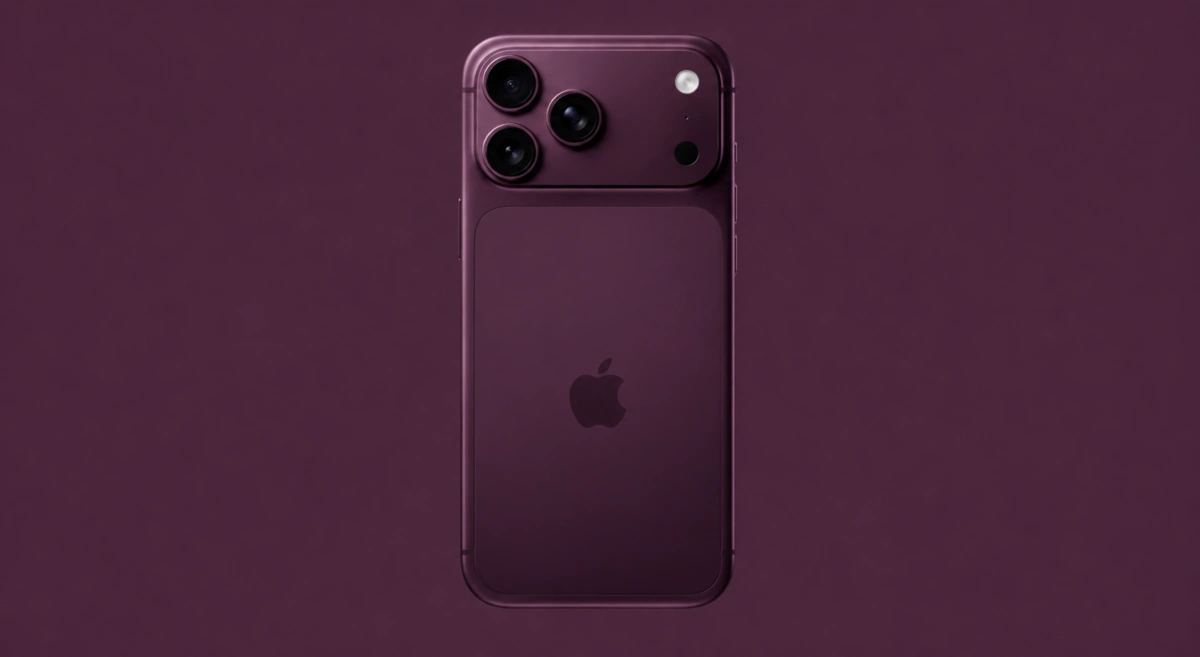
Every September, Apple’s familiar iPhone ritual begins. For the iPhone 18 Pro, CAD renders have appeared, prototype claims have multiplied, analysts are discussing suppliers, and YouTube thumbnails are becoming increasingly dramatic. Then Apple walks onto a stage and tells us what it has actually built.
This year carries more weight. Apple has confirmed that John Ternus will become CEO on September 1, 2026, with Tim Cook moving into the role of executive chairman. Ternus has spent much of his Apple career close to hardware engineering, making the timing unusually interesting.
I do not expect the iPhone 18 Pro to look radically different. The important changes may be underneath: an A20 Pro processor, a 2nm-class manufacturing process, more memory, a wider memory interface, and a variable-aperture camera. As a software engineer, I see less of a specification list and more of a possible platform for Apple’s next generation of software.
Why the iPhone 18 Pro Launch Cycle Feels Different
The rumor cycle now feels a little like Inception: a leak inside a forecast inside another leak. We are analyzing alleged manufacturing documents, supplier maps, test photographs, and analyst forecasts before Apple has said a word about the product.
There may also be a meaningful release change. Current reporting about the iPhone 18 timeline places the Pro and Pro Max in fall 2026, with the standard iPhone 18 potentially moving to early 2027. That schedule is reported, not confirmed by Apple, but it could give Apple’s premium hardware the September stage to itself.
What the Tata Leak Actually Establishes
In June 2026, Tata Electronics disclosed that it had detected a cybersecurity incident. The World Leaks group subsequently claimed to have published more than 200,000 files associated with Tata clients.
Reuters reported that the exposed material included Apple-related supplier information and confidential documents. Further reporting on the files described supplier lists, component details, circuit-board information, and internal drop-test photography apparently connected to the iPhone 18 Pro.
That is significant, but the boundary matters. A breach and the publication of files can be confirmed without every product specification inside those files becoming an official Apple fact. Apple has not validated the final device configuration, and pre-production engineering material can change before launch.
So I would not treat every number circulating online with equal confidence.
What Is Confirmed and What Remains a Rumor
| Claim | Current Evidence | How to Treat It |
|---|---|---|
| Apple leadership transition | Apple announced John Ternus as CEO effective September 1, 2026 | Confirmed by Apple |
| Tata Electronics breach | Tata acknowledged an incident; Reuters reported the publication of a large document set | Confirmed incident, with reported document contents |
| iPhone 18 Pro supplier and test material | Reuters-linked reporting describes supplier lists, component data, and drop-test images | Credible reporting, not an Apple product announcement |
| A20 Pro and 2nm-class process | Repeated supply-chain and technical reporting points in the same direction | Strong pre-launch expectation |
| Larger vapor chamber and WMCM packaging | Reported motherboard imagery and internal scans point to a wider heat spreader and side-by-side processor and memory packaging | Technically plausible, but unconfirmed by Apple |
| 12GB memory | Appears in multiple pre-launch reports | Plausible, but unconfirmed |
| LPDDR6 and 96-bit interface | Reported specifications conflict across rumor sources | Treat as lower-confidence until Apple or hardware analysis confirms it |
| Variable-aperture main camera | Analyst Ming-Chi Kuo and supply-chain reporting point to the feature | Credible forecast, still unconfirmed |
- Current Evidence
- Apple announced John Ternus as CEO effective September 1, 2026
- How to Treat It
- Confirmed by Apple
- Current Evidence
- Tata acknowledged an incident; Reuters reported the publication of a large document set
- How to Treat It
- Confirmed incident, with reported document contents
- Current Evidence
- Reuters-linked reporting describes supplier lists, component data, and drop-test images
- How to Treat It
- Credible reporting, not an Apple product announcement
- Current Evidence
- Repeated supply-chain and technical reporting points in the same direction
- How to Treat It
- Strong pre-launch expectation
- Current Evidence
- Reported motherboard imagery and internal scans point to a wider heat spreader and side-by-side processor and memory packaging
- How to Treat It
- Technically plausible, but unconfirmed by Apple
- Current Evidence
- Appears in multiple pre-launch reports
- How to Treat It
- Plausible, but unconfirmed
- Current Evidence
- Reported specifications conflict across rumor sources
- How to Treat It
- Treat as lower-confidence until Apple or hardware analysis confirms it
- Current Evidence
- Analyst Ming-Chi Kuo and supply-chain reporting point to the feature
- How to Treat It
- Credible forecast, still unconfirmed
This distinction is not there to make the article less exciting. It makes the useful parts easier to see. A strong rumor is still a rumor, while a confirmed corporate event is a fact.
Kuo and the Leak: Two Different Windows Into Apple
Ming-Chi Kuo analyzes Apple’s supply chain from the outside. The reported Tata material, if authentic and correctly attributed, originated much closer to the manufacturing process. That gives us two different views:
- Supply-chain analysis: what Apple’s manufacturing network appears to be preparing.
- Reported internal material: what suppliers may have been engineering, documenting, or testing.
When those independent channels point toward the same architecture, I pay more attention. The overlap cannot replace Apple’s announcement, but it can strengthen confidence in the general direction.
A20 Pro and 2nm: The Upgrade Is Not Only About Speed
The headline specification is likely to be the A20 Pro and its reported move to a 2nm-class process.
One important technical note: “2nm” is an industry process-node label, not a literal measurement of one complete transistor feature. It describes a generation of semiconductor manufacturing rather than giving us a simple ruler measurement.
The practical opportunity is efficiency.
A phone is constrained by battery capacity, thermal dissipation, and the small amount of physical space available for cooling. More computation consumes energy, and that energy eventually becomes heat. A more efficient process can give Apple room to increase performance, lower power consumption, or balance the two.
That matters more when the processor is doing more than opening Safari and Instagram. It matters when it is processing language, images, application context, speech, and local machine-learning workloads.
Vapor-Chamber Cooling May Be the More Important Hardware Upgrade
Reported internal schematics point to a larger vapor chamber, while alleged motherboard imagery suggests WMCM packaging may place the A20 Pro and DRAM beside one another instead of stacking them. If accurate, the wider heat spreader and reduced thermal coupling could help sustain gaming, computational photography, and on-device AI performance for longer. Apple has confirmed neither design, so both remain pre-launch reporting rather than final specifications.
Why It Could Matter for Apple Intelligence
Apple’s long-term AI opportunity is not simply to place a chatbot on the iPhone. The more interesting goal is to make intelligence part of the operating system itself.
That could mean processing language, personal context, photos, documents, app state, and user intent with less dependence on a remote server. More on-device work can improve latency and privacy, and it can keep some functions available without a perfect connection.
But local processing needs compute capacity, memory, and thermal headroom. A more efficient A20 Pro could let Apple run heavier workloads without turning the iPhone into a pocket heater.
This is why I think the better question is not, “How much faster will the benchmark be?” It is, “What can Apple and developers do with the new hardware that was impractical before?”
Why the Reported 12GB of Memory Matters
Reports point to 12GB of memory for the iPhone 18 Pro, although Apple has not confirmed the capacity, memory standard, or rumored 96-bit interface.
Capacity determines how much working data the phone can retain, while bandwidth affects how quickly that data reaches the CPU, GPU, and Neural Engine. That distinction matters for graphics, computational photography, and on-device AI, where large datasets must move quickly between processing units.
More memory will not automatically make every application faster. Its real value depends on Apple’s chip design and software, but it could give future iOS features considerably more operating headroom.
Why the iPhone 18 Pro Is Really a Software Story
Look at the reported pieces together:
- A20 Pro silicon
- a 2nm-class manufacturing process
- more memory capacity
- potentially higher memory bandwidth
- stronger on-device machine-learning capability
Together, they look less like an annual speed bump and more like a platform designed for increasingly demanding software.
Apple controls the silicon, iOS, developer frameworks, system applications, and much of the device ecosystem. That same hardware-software integration is central to how the MacBook Pro M4 Pro behaves as a complete work system. On the iPhone, it is where the reported hardware becomes interesting, but it is also the big unknown. If the A20 Pro and extra memory only make the interface slightly faster, this will be a polished hardware refresh. If Apple uses them for more capable local AI, richer cross-app context, better media processing, or useful offline automation, the story changes.
The question is not whether the iPhone 18 Pro will score 15% or 20% higher in a benchmark. It is whether Apple can turn the additional performance into something people notice outside one.
Camera: The Biggest Change May Be Optical
Ming-Chi Kuo has reportedly forecast that Apple is preparing a variable-aperture main camera for the iPhone 18 Pro and Pro Max.
A variable aperture can give the camera system another physical control over incoming light. In principle, it may help with exposure, low-light behavior, depth of field, video, and the inputs available to computational photography.
That “may” is important. The value will depend on the aperture range, lens design, sensor, stabilization, software, and how often iOS actually uses the mechanism.
Modern phone photography is a complete imaging pipeline:
Lens + aperture + sensor + image signal processor + neural processing + algorithms.
The physical camera captures data, but the final photograph is constructed by the entire system. Give Apple better optical control and a more capable processor, and its software has better raw material to work with. That could be more meaningful than another megapixel increase.
What Engineering Diagrams Can Tell Us
The leaked photographs attract the most attention, but the reported circuit-board and component diagrams are more interesting to me.
Smartphones are brutally constrained engineering problems. The battery, cameras, processor, antennas, memory, logic board, cooling structures, speakers, and sensors all compete for millimeters of internal volume.
Component maps can reveal how Apple and its suppliers are using that volume. They can suggest packaging priorities, board density, camera-module growth, or a different balance between battery and compute hardware.
They cannot guarantee the final retail specification. Pre-production assemblies and test devices may differ from what ships.
Do Not Expect a Radical Exterior Redesign
Reporting around the Tata material described a conventional grey slab-shaped handset with three rear cameras in drop testing. If that is representative of the final product, the iPhone 18 Pro may look familiar.
Honestly, I am fine with that.
Smartphone design is mature. Apple does not need to produce an iPhone 6-to-iPhone X visual transformation every year. It needs to make the device more capable without damaging reliability, battery life, ergonomics, or camera performance.
The more interesting redesign may be inside the phone.
Who Should Upgrade to an iPhone 18 Pro?
The useful answer depends on what is already in your pocket.
| Current iPhone | Likely Upgrade Size | Recommendation |
|---|---|---|
| iPhone 12 Pro or older | Large cumulative jump in performance, battery efficiency, camera capability, display, and connectivity | Strong upgrade candidate |
| iPhone 13 Pro | Meaningful multi-generation improvement across most systems | Likely worthwhile if the final price fits |
| iPhone 14 Pro | Substantial platform change, but the current phone remains capable | A strong upgrade if battery health or camera needs justify it |
| iPhone 15 Pro | Noticeable generational gap, especially if new AI and camera functions are useful | Consider after final reviews |
| iPhone 16 Pro | Raw daily speed may feel similar | Upgrade for a specific capability, not the processor name |
| iPhone 17 Pro | Likely incremental in normal use | Wait unless the final camera or on-device AI feature solves a real need |
- Likely Upgrade Size
- Large cumulative jump in performance, battery efficiency, camera capability, display, and connectivity
- Recommendation
- Strong upgrade candidate
- Likely Upgrade Size
- Meaningful multi-generation improvement across most systems
- Recommendation
- Likely worthwhile if the final price fits
- Likely Upgrade Size
- Substantial platform change, but the current phone remains capable
- Recommendation
- A strong upgrade if battery health or camera needs justify it
- Likely Upgrade Size
- Noticeable generational gap, especially if new AI and camera functions are useful
- Recommendation
- Consider after final reviews
- Likely Upgrade Size
- Raw daily speed may feel similar
- Recommendation
- Upgrade for a specific capability, not the processor name
- Likely Upgrade Size
- Likely incremental in normal use
- Recommendation
- Wait unless the final camera or on-device AI feature solves a real need
If you own an iPhone 16 Pro or 17 Pro, do not upgrade only because Apple gives the processor a new number. Your phone is already fast. The justification has to come from new capabilities, camera behavior, efficiency, battery condition, or a workflow the current phone cannot support well.
My Conclusion: I Am Upgrading
My own decision is easy because I am currently using an iPhone 12 Pro. I will be upgrading to the iPhone 18 Pro Max, and I honestly cannot wait. This would combine years of accumulated improvements: newer Apple silicon, better efficiency, more memory, a much more capable camera system, stronger connectivity, and whatever Apple is ready to do next with on-device intelligence.
For an iPhone 16 Pro or 17 Pro owner, my advice is completely different. Wait for the final specifications, independent camera comparisons, battery testing, and the actual software features. Do not buy a rumor, and do not buy a benchmark.
What appears to be coming is a more capable computer inside a familiar package. As a software engineer, that is what excites me most. So yes, September already feels a little like Christmas, but I still want to see which leaks survive the moment Apple finally puts the phone on stage.
iPhone 18 Pro — Facts & Sources
This fact-to-source register separates confirmed information, industry reporting, analyst forecasts, and specifications attributed to leaked material.
-
Apple leadership transition: John Ternus will become Apple’s CEO on September 1, 2026, while Tim Cook becomes executive chairman. Source: Apple, “John Ternus to become Apple CEO”.
-
Expected release window: Reports place the iPhone 18 Pro and Pro Max in September 2026 and the standard model in early 2027. Apple has not announced this split schedule. Sources: MacRumors iPhone 18 timeline and The Verge release reporting.
-
Tata breach and reported product material: The cyberattack reportedly exposed more than 200,000 files, including Apple-related supplier and component information plus internal drop-test photographs. Source: Reuters reporting on the Tata data leak.
-
Engineering diagrams, A20 Pro, and 2nm-class manufacturing: The files reportedly included circuit-board layouts and A20 Pro-related engineering information. These remain reported specifications rather than Apple-confirmed product details. Source: The Verge’s examination of the engineering files.
-
Reported thermal architecture: Alleged motherboard imagery points to WMCM packaging that places the processor and DRAM beside one another, while reporting on internal schematics describes a larger vapor chamber. Both remain unconfirmed. Sources: MacRumors analysis of the reported A20 Pro packaging and Android Authority coverage of the leaked internal schematics.
-
Reported 12GB memory capacity: Several reports connect a possible memory increase with Apple’s growing on-device AI requirements. The capacity and memory standard remain unconfirmed. Source: Cinco Días reporting on iPhone 18 memory.
-
Variable-aperture camera and component cost: Ming-Chi Kuo forecasts a variable-aperture main camera and reportedly expects its component to cost Apple approximately 50% more than the current part. Source: MacRumors reporting on Kuo’s camera forecast.
-
Nature of Kuo’s evidence: Kuo publishes supply-chain analysis, not official Apple specifications. Source: Ming-Chi Kuo’s public analysis on X.
Editorial Note
The A20 Pro, 2nm-class process, WMCM packaging, enlarged vapor chamber, 12GB LPDDR6 memory, 96-bit interface, and related product specifications are not official Apple facts. Where these details appear, they are described as specifications reportedly contained in leaked material or repeated in supply-chain reporting. Reuters confirms the existence of the breach and reports Apple-related component information, but it does not independently confirm every individual specification attributed to the files.
FAQ
Common questions
Has Apple officially announced the iPhone 18 Pro?
No. Apple has not officially announced the iPhone 18 Pro, its specifications, pricing, or release date. The details in this guide come from Reuters reporting, supply-chain analysis, and other pre-launch reports, and should be treated according to their individual confidence levels.
When is the iPhone 18 Pro expected to launch?
Current reporting points to a fall 2026 launch for the iPhone 18 Pro and Pro Max, while the standard iPhone 18 may move to early 2027. Apple has not confirmed this split schedule.
Will the iPhone 18 Pro have 12GB of RAM?
Multiple reports point to 12GB, but Apple has not confirmed the capacity or memory standard. Claims about LPDDR6 and a 96-bit interface remain less certain than the broader expectation of an A20 Pro and a 2nm-class manufacturing process.
Should an iPhone 17 Pro owner upgrade to the iPhone 18 Pro?
Probably not for speed alone. The decision should depend on final camera features, battery efficiency, on-device AI capabilities, price, and whether those changes solve a real limitation in the current phone.