Is the iPhone Duo the New Grail? 5 Reasons I Wouldn't Rush
Is the iPhone Duo worth buying now? A hands-on first impression, screen and battery details, early display concerns, and five reasons I wouldn't rush.
Quick Summary
What to know first
Ten to fifteen minutes with the iPhone Duo in an Apple Store made me want one. But early inner-screen reports, first-generation uncertainty, and its folded thickness mean I would not recommend buying it yet.
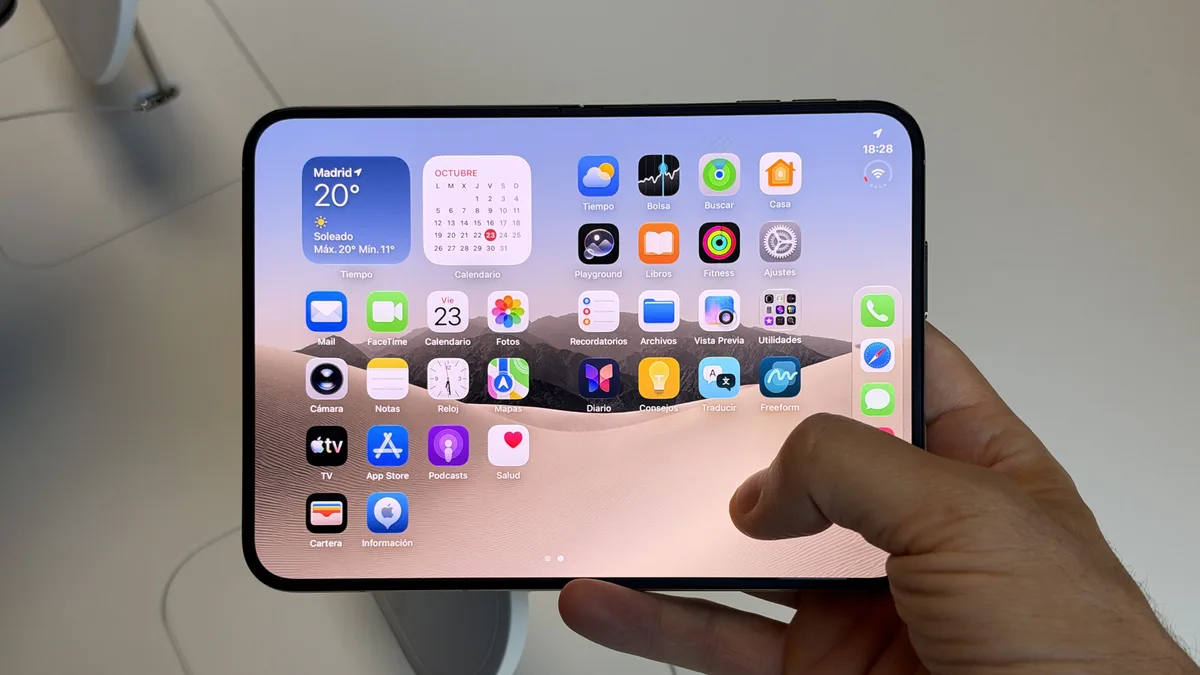
Foldables aren’t new, and Apple is late to the party. Ever since the first ones appeared, I’ve asked myself: why would I want a phone that folds when I can just take my tablet? I thought they were cool pieces of engineering, but I never actually wanted one.
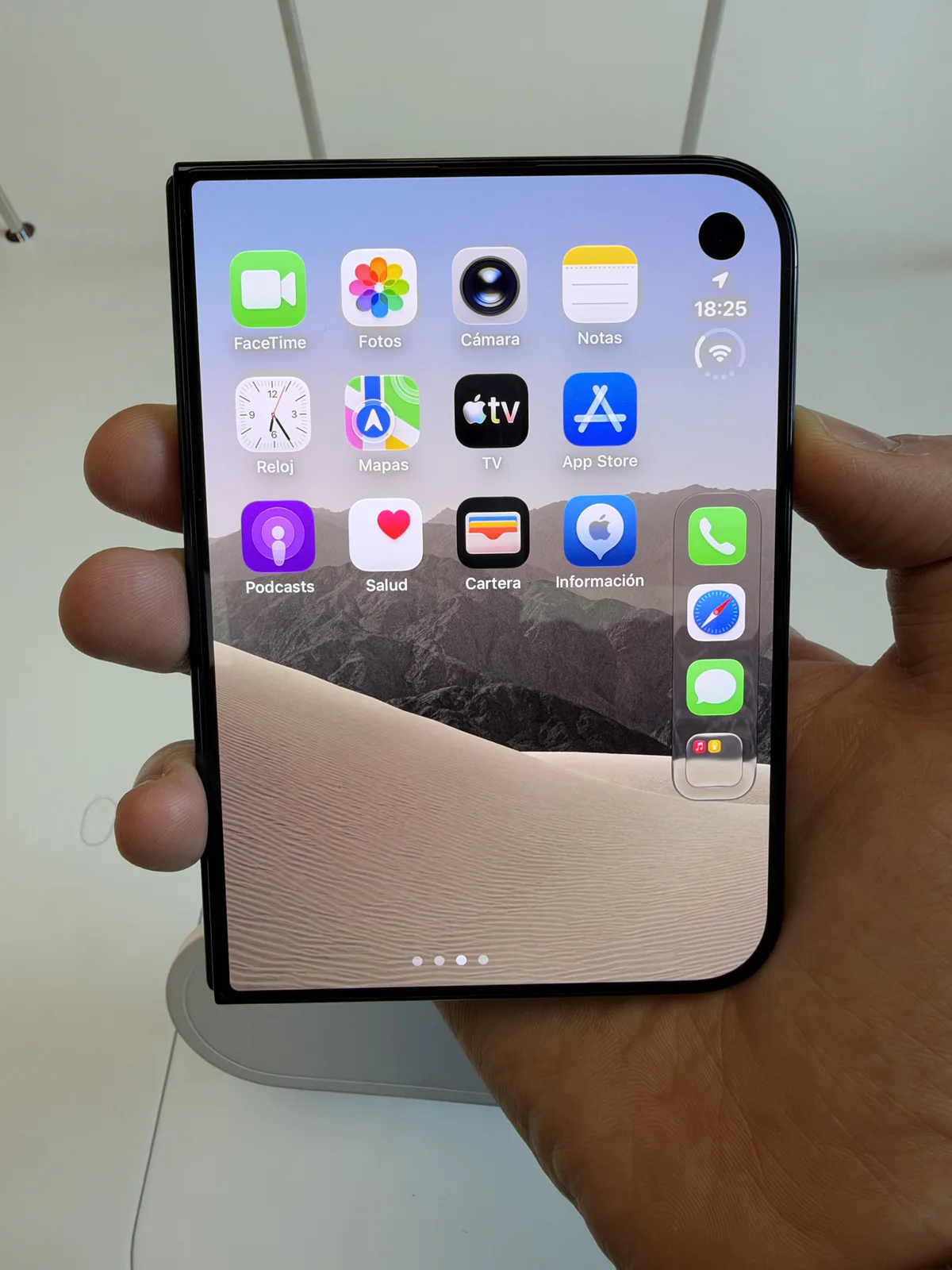
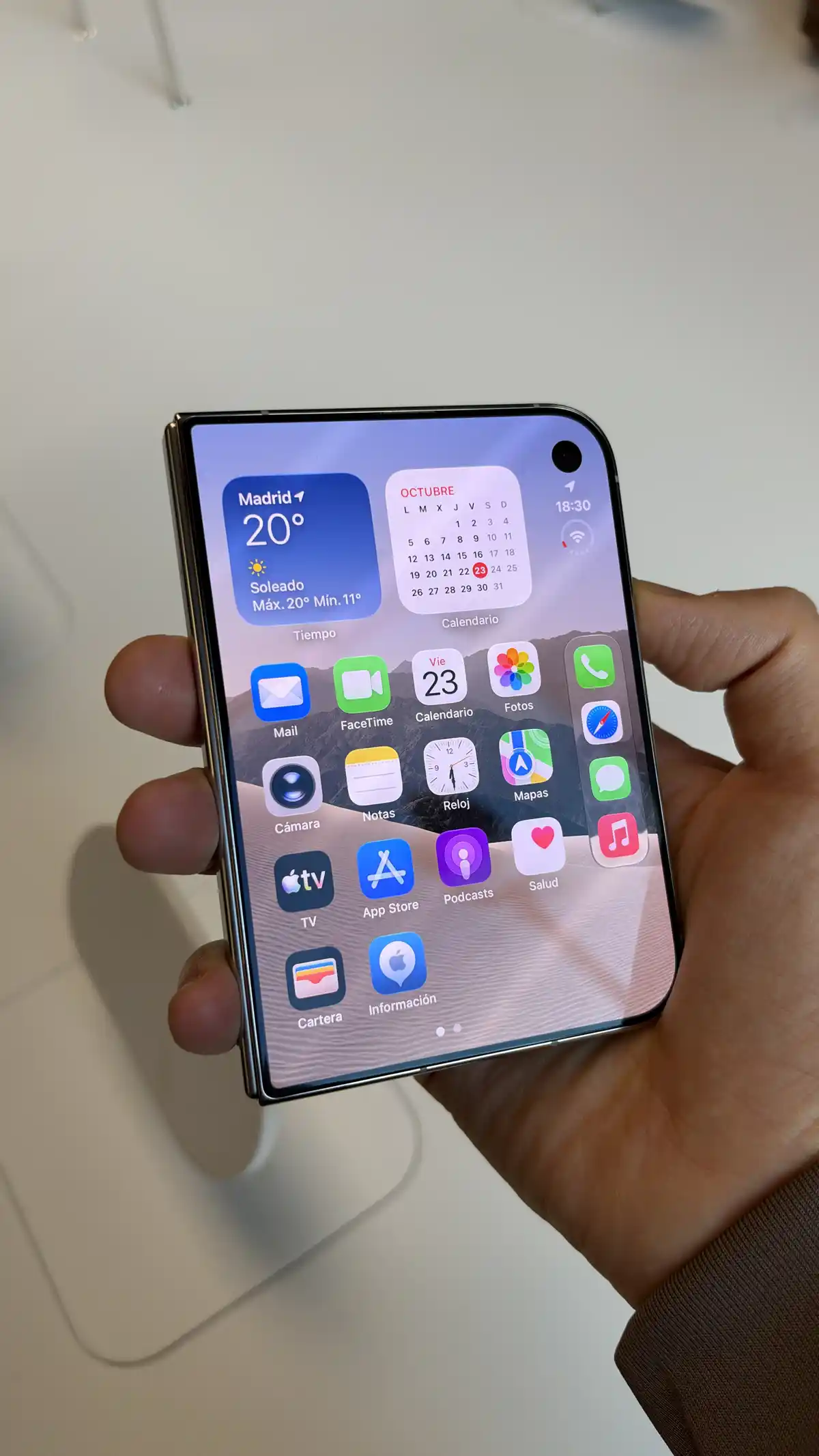
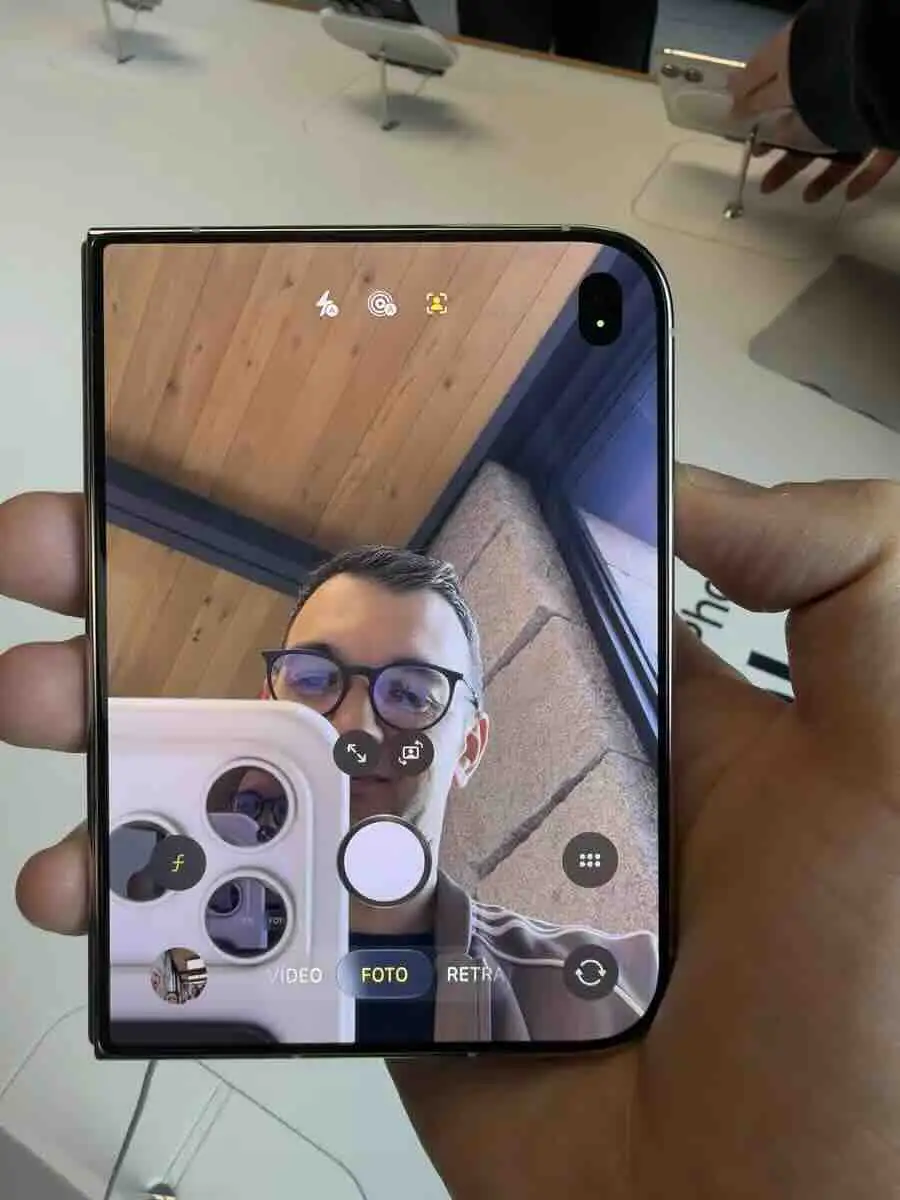
Even when the iPhone Duo was announced, I had just bought my iPhone 18 Pro Max and couldn’t have cared less. Then last week I spent 10-15 minutes with the Duo in an Apple Store. Closed, it felt unexpectedly compact next to my Pro Max. Open it like a book, and the page-like animation looks lovely; suddenly there is space to read, use two apps, or do the very important daily task of watching Netflix. I’m joking. Mostly.
I left wanting one. I can’t explain that change of heart with a spec sheet alone, though the larger screen helps explain the appeal. But wanting one is not the same as knowing what it is like to own one. A short store visit cannot test its hinge over time, battery life, or daily camera use. Here is what the hardware promises, and why I still wouldn’t recommend buying one yet.
Screen, Battery, and Hinge
Screen: Apple pairs a 7.6-inch folding OLED with a 5.4-inch outer OLED; both have adaptive refresh rates up to 120Hz. The inner display has a nano-texture finish. Apple says support for Apple Pencil (USB-C) is coming later this year, so I would not treat it as a feature I can use on launch day. I liked the space the screen gave me in the store, but a demo cannot tell me how the fold will wear.
Battery: There are two built-in batteries. Apple rates the Duo for up to 24 hours of typical use and, in its video-playback tests, up to 44 hours on the outer screen or 31 on the inner. Those are different tests, not a promise that my navigation, calls, and split-screen days will last that long.
Hinge: Apple uses a titanium folding design and a 3D-printed titanium hinge cover. In my hands, opening it took a little more effort through roughly the first 20% of the movement, felt smooth through the middle, then firmed up again over the last 20% until it was fully open. I liked that: it gave the Duo a controlled, premium feel and made the movement feel reassuring rather than loose. That is a real buying point for me, though the sensation alone cannot prove the hinge or screen is better protected over time.
Daily basics: The Duo uses Touch ID in its side button rather than Face ID, and it is eSIM-only, with no physical SIM tray. Neither is a deal-breaker for me, but both are worth knowing before switching from a Pro Max.
An Engineer’s Take
What impressed me was not simply that the Duo folds. Closed, it felt compact; open, it gave me a workspace I could actually imagine using. I walked out wanting one, but the engineer in me keeps asking how the screen, hinge, batteries, and software will work together after months of daily use. A smooth store demo cannot answer that. That is the difference between admiring the engineering and recommending the purchase.
Five Reasons Not to Rush
Some of these questions will become clearer with time; others are trade-offs to consider before paying for the folding design.
1. This is a first-generation foldable with an early screen issue
First-generation hardware often has unanswered durability questions; that alone does not mean every Duo is defective. As of October 27, 2026, some early owners have reported the inner screen cracking along the fold, and Apple told 9to5Mac it is aware of an inner-display issue affecting a small number of units and advises affected owners to contact AppleCare for a replacement. The cause and failure rate are not established. At this price, I would let that picture become clearer before relying on one as my main phone.
2. The price buys the format, not every Pro feature
The Duo starts at $1,999 in the U.S. and 2,339 euros in Spain. That premium pays for a folding display and the design around it. It does not make this the automatic upgrade over an iPhone 18 Pro. I would compare the final local price, return window, and repair coverage with the actual work I would do on the larger screen. I would not assume a discount will arrive on a particular date.
3. Closed dimensions matter more than open-screen magic
At the Apple Store, the closed Duo felt shorter and more compact in my hand than my iPhone 18 Pro Max. But Apple lists it at 254g, 11.3mm thick, and 84.1mm wide when folded. For context, Samsung lists the standard Galaxy Z Fold8 at 9.7mm folded. The Duo is beautifully executed, but it is 1.6mm thicker than that specific rival. That difference and the weight matter more on a full day in my pocket than during a few minutes in a shop.
4. Its cameras make a different trade
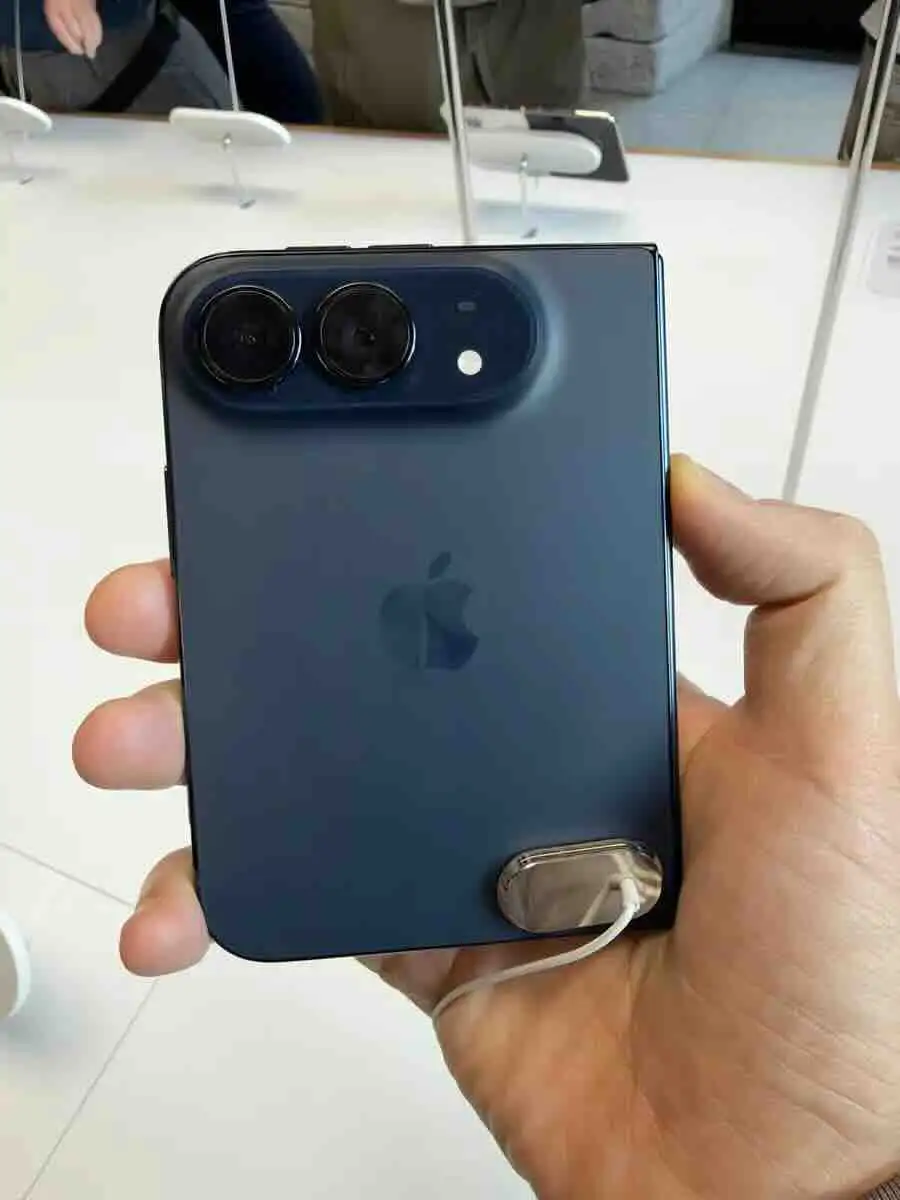
The Duo has a 48MP main camera, a 48MP ultra wide, and an optical-quality 2x crop from the main sensor. The iPhone 18 Pro adds a dedicated 4x telephoto camera. That does not make Duo a bad camera phone, but if I often photograph a subject across a room or farther down a street, the missing long lens would matter more to me than the clever outer-screen preview. Our 2026 iPhone lineup comparison puts those choices side by side.
5. Battery and split-screen usefulness need real days
Apple’s ratings are a useful starting point, not my battery result. I want to see what happens on a day of navigation, photos, calls, and two apps open at once. I would also check whether my apps use that inner screen well. Independent mixed-use reports will tell me more than the launch demo.
When I Would Buy It
That store visit convinced me the larger screen is a real feature, not merely a party trick. But my buying point is simpler: I would buy a Duo that folds as thin as the Galaxy Z Fold8’s 9.7mm. This one is 11.3mm. More owner reports can answer my questions about battery life and screen durability, but they cannot make this generation thinner in my pocket. When Apple gets closer to that slimmer shape, I would try my own apps on the inner display and check the return and coverage terms before buying.
My Verdict
Do I want an iPhone Duo? Yes. Would I advise most people to buy one today? No. Ten minutes in the Apple Store overturned years of indifference to foldables, and I didn’t expect that. But the acknowledged early screen issue and unknown long-term hinge life are reasons to wait for more evidence. For me, the 11.3mm folded body is the deciding factor: I would be ready to buy a future Duo that feels as slim as its Samsung counterpart.
If you’re still willing to give it a chance, I understand. God knows I want to. You can search current listings below; just check the seller, return window, and coverage terms before deciding.
Sources and Method
I handled the Duo for 10-15 minutes in an Apple Store. That informs my comments about its closed feel and opening experience, not its long-term durability, battery endurance, or camera quality. Display, battery, hinge-material, dimension, camera, SIM, Touch ID, and Pencil details come from Apple’s iPhone Duo specifications. U.S. and Spanish prices come from Apple’s announcement and Apple’s Spanish announcement; the camera comparison uses Apple’s iPhone 18 Pro specifications. The folded-thickness comparison uses Samsung’s model comparison. The early display concern is based on Apple’s statement to 9to5Mac, not a test of my own unit; neither its cause nor prevalence is known.
FAQ
Common questions
Is the iPhone Duo worth buying now?
I would wait. Apple has acknowledged an inner-display issue affecting a small number of early units, and we do not yet know its cause or long-term failure rate. The larger screen is compelling, but it is a first-generation product at a premium price.
Does the iPhone Duo replace a small iPad?
For reading, video, notes, and some side-by-side tasks, it might. It still runs iOS rather than iPadOS, so check your essential apps and workflows before treating it as a complete tablet replacement.